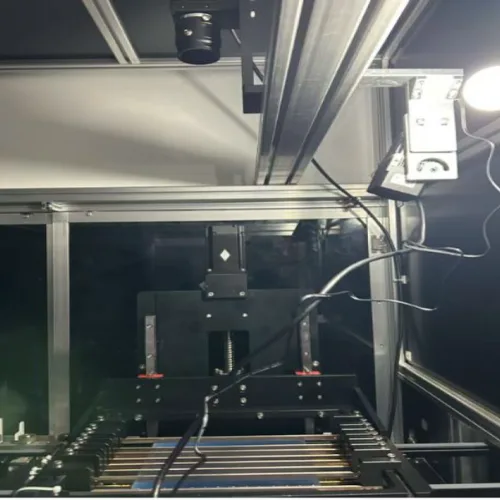
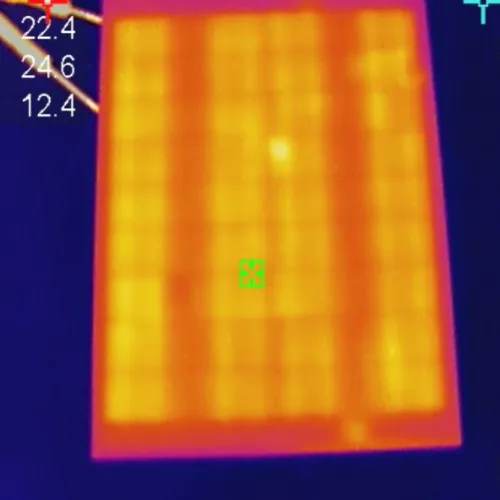
Photovoltaic module EL inspection utilizes the principle of electroluminescence(EL) to detect internal defects in solar cell modules. This technology applies a forward current to the cell, using the reverse process of the photovoltaic effect to cause the cell to emit infrared or visible light when in operation. This light is captured by specialized camera equipment to form a thermal image. Analysis of these images can effectively detect hidden cracks, breakage, and other defects in the photovoltaic module.
Photovoltaic Module Hot Spot Shading Inspection
[Core Requirements]
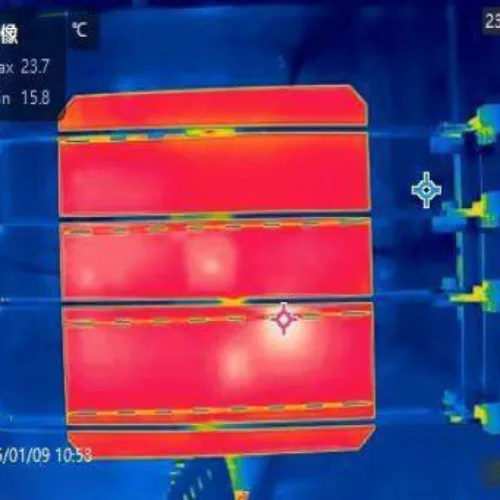
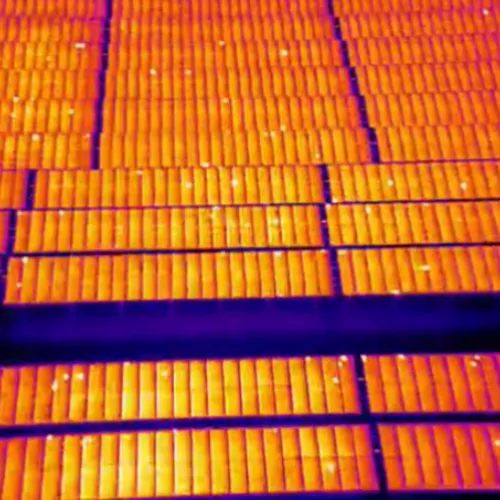
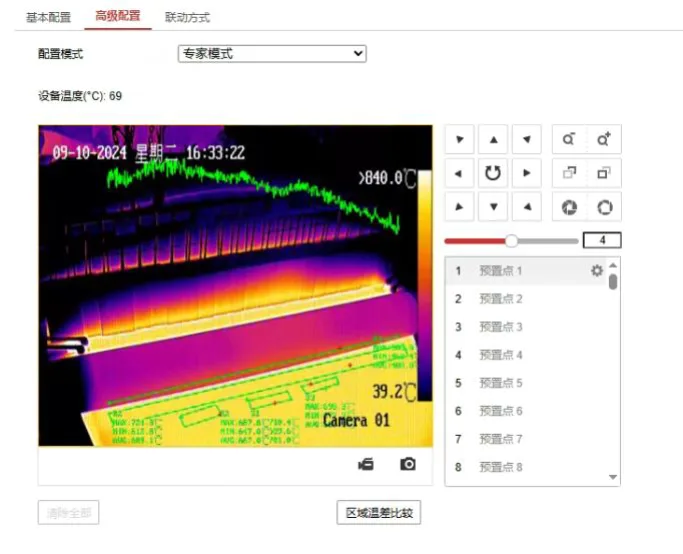
Use an infrared thermal imager to photograph photovoltaic modules and observe the temperature distribution on the module surface through infrared thermal images. Hot spots appear as high-temperature areas and can be detected and located using thermal images. Depending on the performance and quality of the modules, shading may reduce output power, affect power generation, or even lead to module burnout. Therefore, hot spot shading detection can effectively assess module operating efficiency.
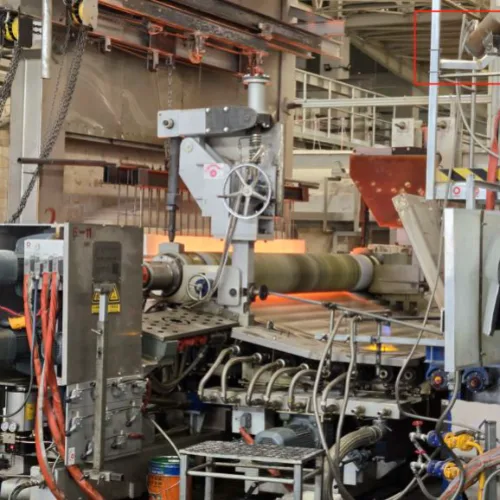
The photovoltaic glass production process includes: batching → melting → roll forming → annealing → cooling → cutting → sheeting → packaging.Roll forming is the core process, using two calendering rollers to squeeze the glass into shape. One of the main applications of glass produced by calendering is solar photovoltaic panel components, with other applications widely found in the construction, furniture, and decoration industries.
[Pain Points]
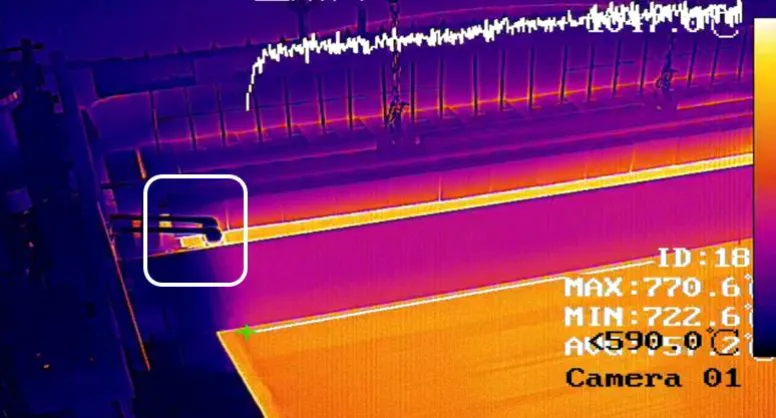
Monitoring 15 temperature points (three rows and five columns of points on the glass ribbon to monitor temperature uniformity), two line temperatures (monitoring curling on the calendering rollers and setting early warning and alarm limits), and several frames (monitoring whether the torches on both sides of the glass ribbon are extinguished. Each calendering machine has a different design; some have two, some have three, and some have four pairs of torches). Temperature measurement methods like thermocouples are not suitable for this scenario.
Thermal Imaging Applications
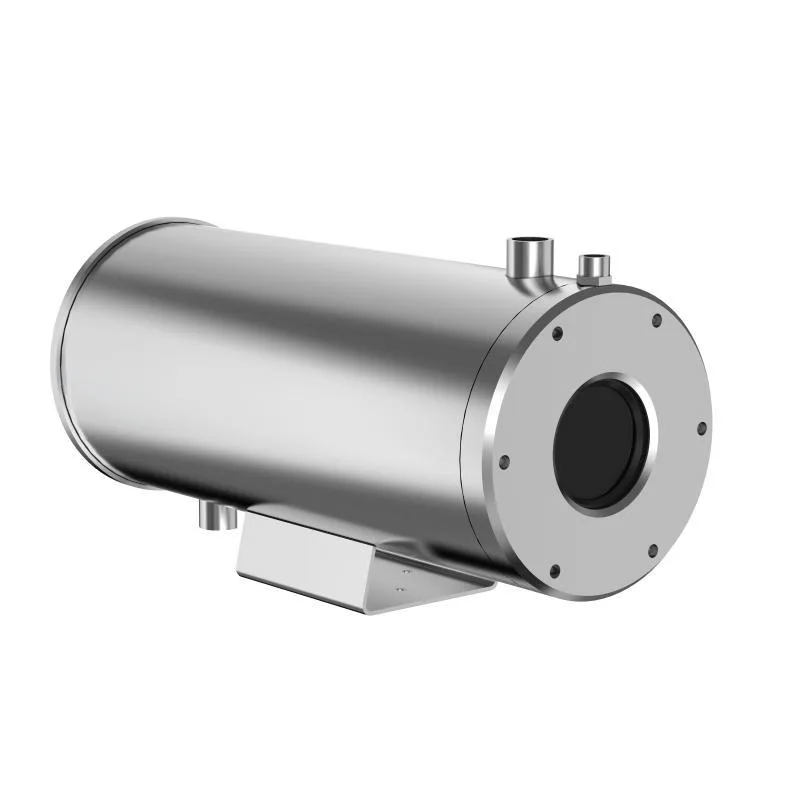
1. Technical Route: Thermal imaging ultra-high temperature rollers are installed at appropriate locations on the tooling to monitor the glass ribbon’s point and line temperature and flame extinguishing status in real time. These data are then uploaded to the host computer’s integrated software for analysis of temperature uniformity, edge curling, and flame extinguishing, to determine if the glass ribbon rolling process has passed.
2. Product Recommendation:Thermal Imaging Ultra-High Temperature Roller.
3. User value: Thermal imaging enables visual temperature measurement, and analysis software helps determine whether the calendering process is qualified for testing, effectively improving the production process yield.
*Fine-Lens currently offers infrared thermal imaging products such as thermal imagers, thermometers, compact cameras, and related lenses. If you have any questions, please contact our official customer service for product information.
Send Successful!
Thank you for your message! We will reply you within 24 hours on weekdays!